Data-Driven Project Planning
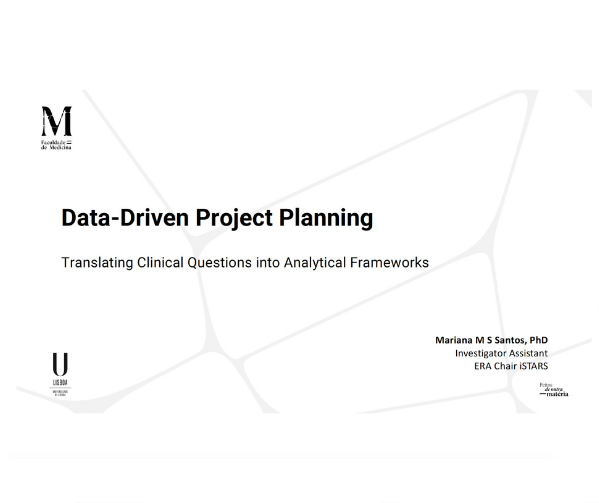
Download Data-Driven Project Planning Powerpoint presentation created by Mariana Santos for iSTARS Training School: Medicine in the Data Era

Download Data-Driven Project Planning Powerpoint presentation created by Mariana Santos for iSTARS Training School: Medicine in the Data Era
Download Scientific Presentations: Strategies for engaging and effective communication Powerpoint presentation created by Beatriz Sousa
Download Preparing Data for Open Access and Sharing Powerpoint presentation created by Mariana Santos for iSTARS Training School: Medicine in the Data Era [...]
Download Data Protection and Ethics in Clinical Research Powerpoint presentation created by Mariana Santos for iSTARS Training School: Medicine in the Data Era [...]
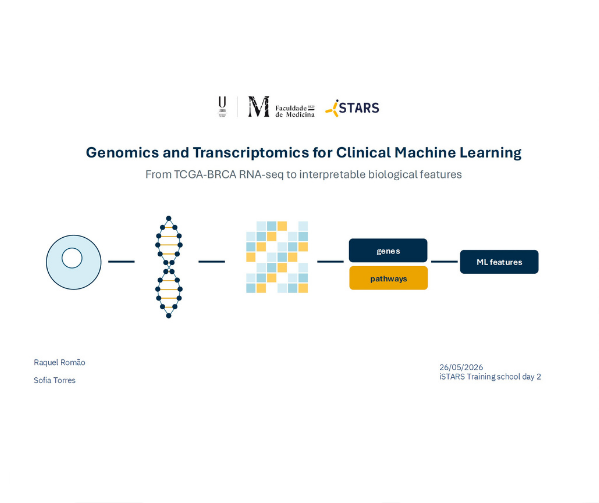
Download Genomics and Transcriptomics for Clinical Machine Learning Powerpoint presentation created by Raquel Romão and Sofia Torres for iSTARS Training School: Medicine in the Data Era [...]
Download Statistical Foundations for Biomedical Research Powerpoint presentation created by Mariana Santos for iSTARS Training School: Medicine in the Data Era
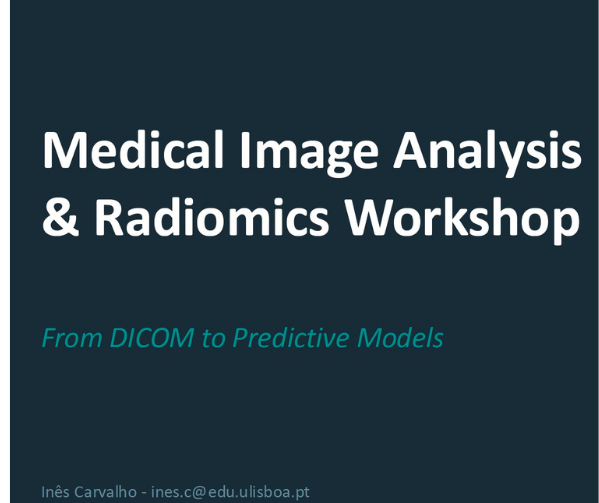
Download Machine Learning for Medical Imaging Powerpoint presentation created by Inês Carvalho for iSTARS Training School: Medicine in the Data Era
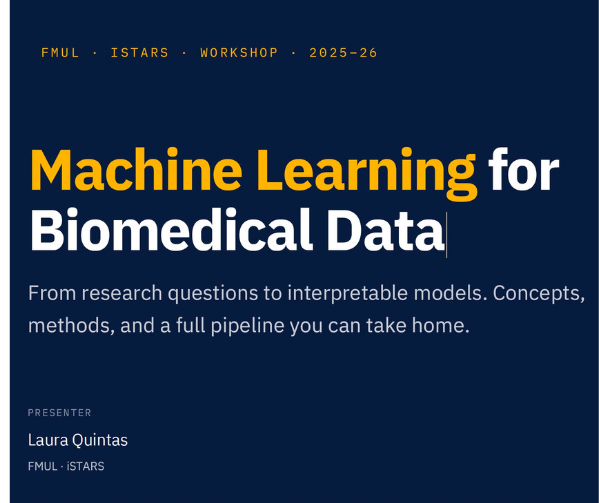
Download Machine Learning for Biomedical Data Powerpoint presentation created by Laura Quintas for iSTARS Training School: Medicine in the Data Era
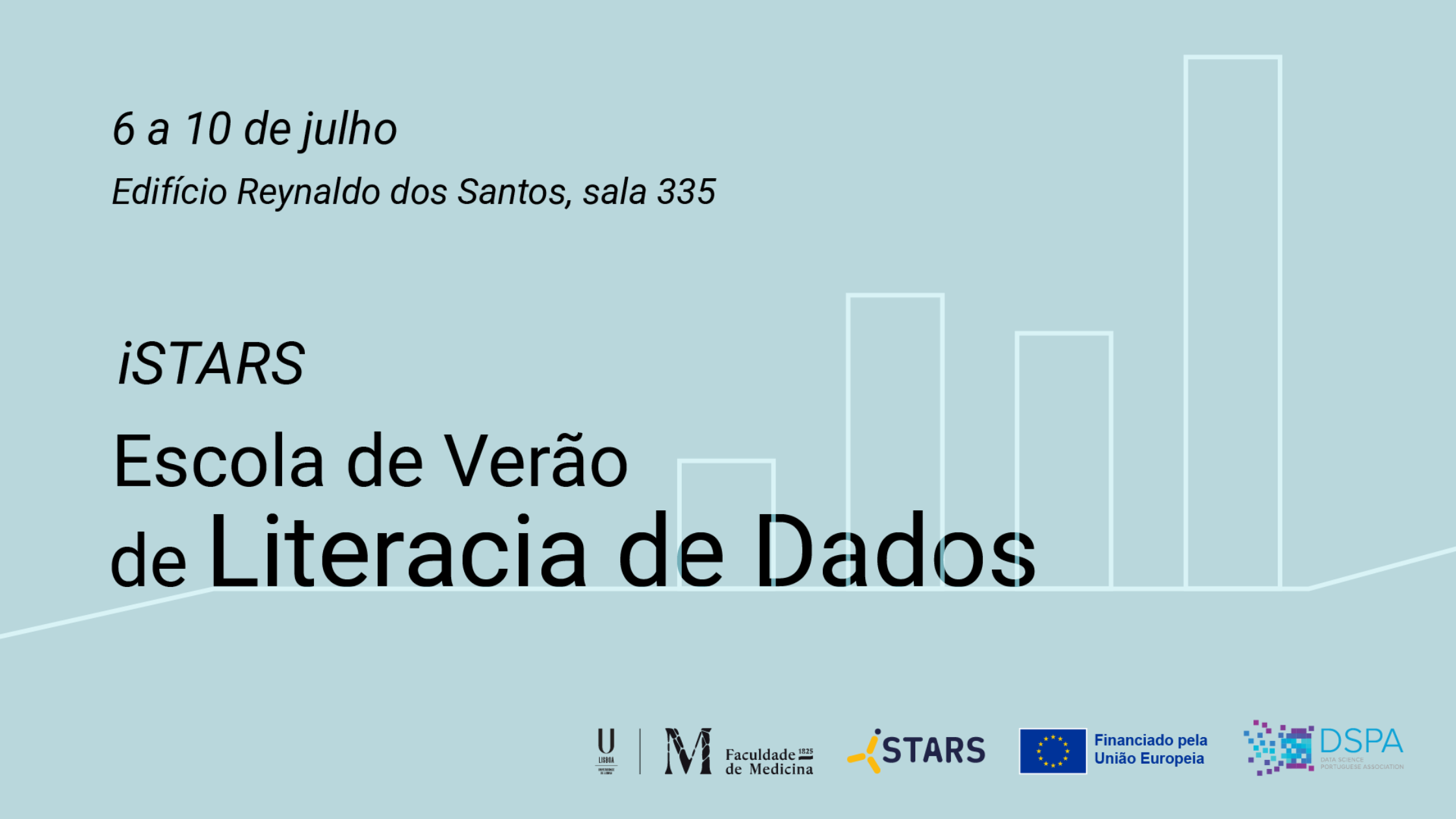
6 e 10 de julho de 2026, Sala 335, Edifício Reynaldo dos Santos
A new study published in the International Journal of Molecular Sciences has investigated how low doses of ionizing radiation, that can affect tissues and organs near a tumour during cancer treatment, may influence the formation of pre-metastatic niches in the lungs. This process involves changes in the lung tissue that make it more receptive to disseminated breast cancer cells settling and growing there later on – forming metastasis.

Tel. +351 217 999 422
Address. Avenida Professor Egas Moniz, 1649-028 Lisboa — Portugal
Email. istars@medicina.ulisboa.pt

The project iSTARS received funding from the European Union’s Horizon 2020 Research and Innovation programme under grant agreement No 952377

@ 2024. All Rights Reserved. Developed by Axon Creative Studio